Hair Replacement for Women: Options, Benefits, Costs, and What to Expect
Home / Hair Transplant / Hair Replacement for Women: Options, Benefits, Costs, and What to Expect
Posted On : September 30, 2026 | Category : Hair Transplant | Author: Beverly Hills Hair Restoration Team
Summary
Women have several hair restoration options, including Smart FUE®, Smart FUT®, and Smart PRP®. Smart FUE® and Smart FUT® are surgical options that move healthy donor hair to thinning or sparse areas, while Smart PRP® is a non-surgical treatment that supports existing hair and scalp health. The right choice depends on the cause and extent of hair loss, donor hair availability, scalp condition, lifestyle, and long-term goals. A proper evaluation can help determine the most suitable approach.
Introduction
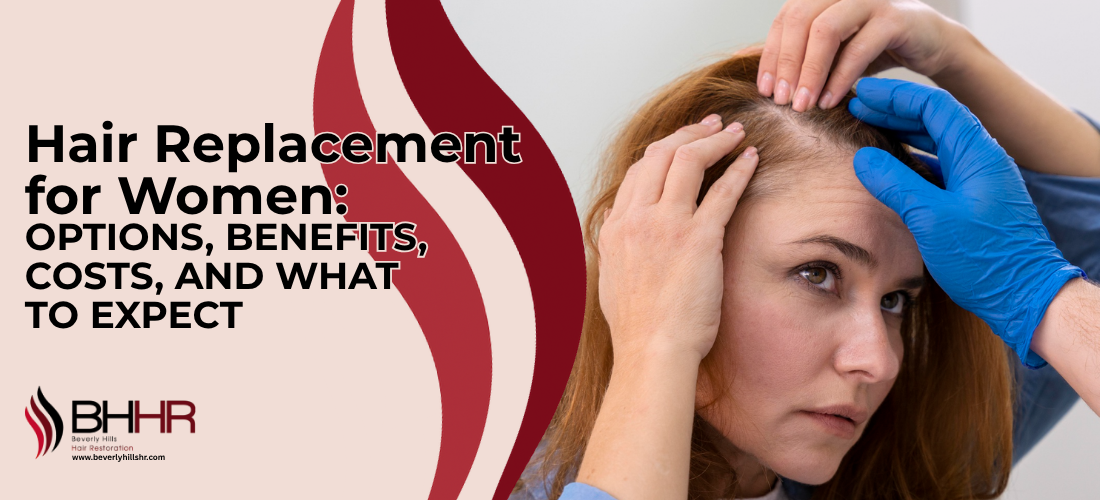
Hair thinning, widening part lines, and increased scalp visibility are common concerns for many women and can affect how they feel about their appearance. Female hair loss can develop differently from male-pattern hair loss, often appearing as diffuse thinning rather than a clearly receding hairline or bald area. Because of this, treatment planning may require a closer look at the cause of hair loss, donor hair availability, and overall scalp condition. Depending on these factors, women may consider surgical options such as Smart FUE® or Smart FUT®, or non-surgical treatments such as Smart PRP® to support existing hair.
What Is Hair Replacement?
Hair replacement refers to treatments used to restore or improve hair coverage in areas affected by thinning or hair loss. Unlike general hair-loss treatments, which may focus on slowing shedding or supporting existing hair, hair replacement aims to improve visible density in specific areas. Surgical options such as Smart FUE® and Smart FUT® move healthy donor follicles into thinning areas and are intended to provide long-term growth. Non-surgical approaches, including Smart PRP®, may help support existing hair but often require a series of treatments or ongoing maintenance. The right approach depends on the pattern of hair loss and individual needs.
What Hair Replacement Options Are Available for Women?
Women may consider different hair replacement options depending on the pattern of hair loss, donor hair availability, and the areas that need more coverage. Surgical techniques can be used to move healthy follicles from the donor area to thinning areas, while careful hairline planning can help create a natural-looking result.
Smart FUE® Hair Transplant
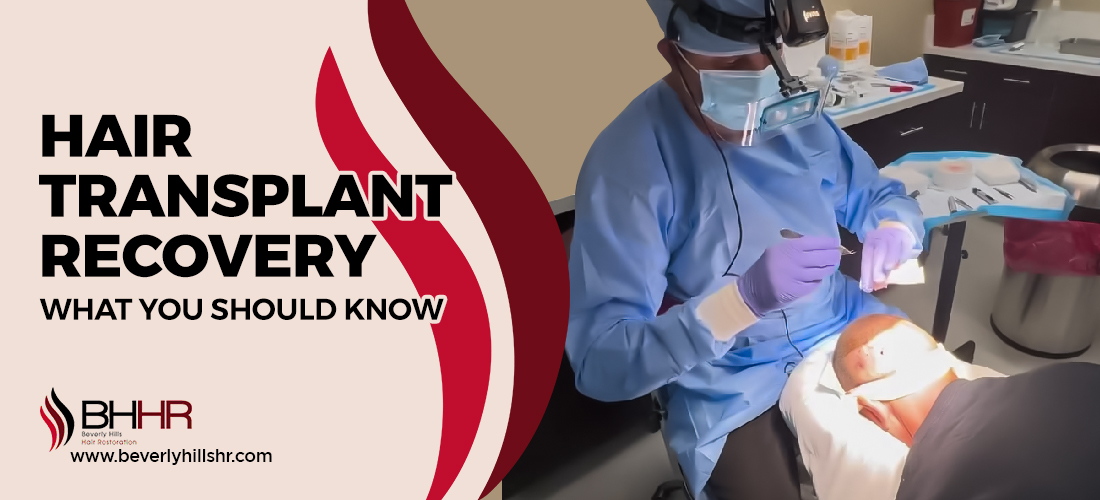
Smart FUE® is a hair transplant technique in which individual follicular units are extracted from the donor area, usually from the back or sides of the scalp. These follicles are then carefully placed into areas affected by thinning or hair loss. It may be considered for a widening part, thinning hairline, temple recession, or other localized areas where additional density is needed.
Smart FUT® Hair Transplant
Smart FUT® involves removing a thin strip of scalp from an area with healthy donor hair. The strip is then divided into individual follicular units, which are transplanted into thinning areas. This approach may be considered when a larger number of grafts are needed or when preserving donor-area density is an important part of the treatment plan.
Smart PRP®
Smart PRP® is a non-surgical hair restoration treatment that uses platelet-rich plasma prepared from the patient’s own blood. It is applied to the scalp to help support existing hair follicles and overall scalp health. Smart PRP® may be considered for women experiencing early thinning, reduced hair density, or ongoing hair loss when a non-surgical approach is more appropriate.
What Types of Female Hair Loss May Be Suitable for Hair Replacement?
Hair replacement may be considered for women with certain stable patterns of hair loss, including:
- Female pattern hair loss: Gradual thinning across the top or crown may be suitable for treatment when enough healthy donor hair is available.
- Receding or thinning hairline: Hair transplantation may help improve a sparse or uneven frontal hairline and restore better coverage.
- Traction-related hair loss: Hair loss caused by repeated tension from tight hairstyles may be treated when the affected follicles are no longer actively damaged.
- Hair loss from surgery or scarring: Transplantation may help improve coverage in some areas affected by scars or previous surgical procedures.
- Localized thinning: Small or specific areas of thinning may be suitable for targeted hair restoration.
Some causes of active or sudden hair loss should be medically evaluated before transplantation. Identifying the underlying cause helps determine whether surgical or non-surgical treatment is appropriate.
What Are the Benefits of Hair Replacement for Women?
Hair replacement can help improve both coverage and overall hair appearance for women experiencing thinning or localized hair loss. Depending on the treatment approach, key benefits may include:
- Better coverage: Adds density to areas where the scalp has become more visible.
- Improved hairline shape: Helps create a fuller and more defined frontal hairline.
- Natural-looking growth: Transplanted follicles continue to grow hair in the treated areas.
- More styling flexibility: Existing and transplanted hair can usually be cut and styled together.
- Personalized planning: Treatment can be adjusted based on hair texture, density, growth pattern, donor supply, and individual restoration goals.
How Much Does Hair Replacement for Women Cost?
The cost of hair replacement for women can vary because every treatment plan is different. Instead of using one fixed price, providers usually consider several factors when estimating the overall cost:
- Treatment type: Surgical and non-surgical options have different pricing structures.
- Number of grafts: More extensive restoration may require a higher number of grafts.
- Size of the thinning area: Larger areas generally require more treatment.
- Technique used: The chosen hair transplant method can affect the cost.
- Provider experience: Pricing may vary based on the provider’s expertise and treatment approach.
- Geographic location: Costs can differ between cities and regions.
- Number of sessions: Some women may need more than one session to reach their treatment goals.
A consultation provides the most accurate cost estimate based on individual hair loss and restoration needs.
What Should You Expect After Hair Replacement?
Recovery and hair growth happen gradually after a hair transplant, so results are not immediate.
- First few days: Mild redness, swelling, or tenderness may occur around the treated areas.
- Temporary shedding: Some transplanted hairs may shed during the first few weeks, which is a normal part of the growth cycle.
- Early growth: New hair may begin appearing around 3 to 4 months after treatment.
- Visible improvement: More noticeable density often develops between 6 and 9 months.
- Longer-term maturation: Hair can continue to thicken and mature for 12 months or longer, with some patients seeing continued improvement up to 18 months.
Are There Any Limitations?
Hair replacement can improve coverage, but it is important to understand the possible limitations before treatment.
- Temporary redness or swelling: Mild redness, tenderness, or swelling may occur during the early recovery period.
- Shedding: Some transplanted or nearby hairs may temporarily shed before new growth begins.
- Scarring: The amount and type of scarring can vary depending on the transplant technique used.
- Uneven growth: Hair may grow at different rates during the first several months.
- Limited donor supply: The amount of healthy donor hair available can affect how much coverage is possible.
- Ongoing hair loss: Existing natural hair may continue thinning even after transplanted follicles are placed.
Who Is a Good Candidate for Female Hair Replacement?
A good candidate for female hair replacement is usually someone with a clearly identified and relatively stable pattern of hair loss. Several factors help determine whether a hair transplant may be suitable:
- Stable hair-loss pattern: Hair loss should be reasonably stable rather than rapidly progressing.
- Suitable donor density: Enough healthy hair should be available in the donor area for transplantation.
- Realistic expectations: Candidates should understand the amount of coverage and density that may be achievable.
- Healthy scalp: The scalp should be healthy enough to support healing and transplanted follicles.
- Appropriate diagnosis: The cause of hair loss should be identified before treatment to determine whether transplantation is the right approach.
How to Choose the Right Hair Replacement Option
Choosing the right hair replacement option depends on several personal and clinical factors. What works well for one woman may not be the best choice for another.
- Cause of hair loss: The underlying reason for thinning should be identified first.
- Pattern and severity: The location and extent of hair loss can influence which treatment is suitable.
- Donor hair: Surgical options require enough healthy donor hair for transplantation.
- Desired coverage: Some women may want targeted restoration, while others need broader coverage.
- Budget: Costs can vary between surgical and non-surgical options.
- Lifestyle: Recovery time and maintenance needs should fit daily routines.
- Long-term goals: Consider whether you want lasting follicle growth, ongoing maintenance, or support for existing hair.
A professional evaluation can help match these factors with the most appropriate treatment approach.
Why Choose BHHR for Women’s Hair Restoration?
At BHHR, Dr. John Kahen provides personalized hair restoration planning for women with different patterns of thinning and hair loss. Treatment options include Smart FUE®, Smart FUT®, and Smart PRP®, with each approach selected based on the patient’s hair condition, donor availability, and individual restoration goals.
- Multiple treatment options: Surgical and non-surgical approaches are available based on individual needs.
- Personalized planning: Hairline shape, donor density, hair texture, and thinning pattern are considered before treatment.
- Focused hair restoration care: Treatment planning is centered on improving coverage while maintaining a natural appearance.
- Long-term approach: Care considers both transplanted hair and the possibility of continued thinning in existing hair.
Conclusion
There is no single hair replacement option that is right for every woman. The best approach depends on the cause and pattern of hair loss, the amount of healthy donor hair available, scalp condition, and individual goals. Some women may be better suited for surgical options such as Smart FUE® or Smart FUT®, while others may benefit from non-surgical approaches such as Smart PRP® or external coverage options. A proper evaluation can help determine which treatment is most appropriate and what type of result may realistically be achieved over time.
Take the first step toward a fuller, more confident look. Schedule your free consultation with Beverly Hills Hair Restoration today and discover which hair restoration approach may be right for you.
FAQS
Do women need to shave their head for a hair transplant?
Not always. Depending on the technique, number of grafts, hairstyle, and donor-area requirements, some female patients may only need limited trimming rather than shaving the entire scalp. The exact preparation is determined during treatment planning.
Is female hair transplantation permanent?
Transplanted follicles are generally selected from donor areas that are more resistant to pattern hair loss, so they can continue producing hair long term. However, untreated natural hair surrounding the transplanted follicles may still become thinner with time, which can affect overall density.
Does health insurance cover hair restoration for women?
Hair transplantation performed for cosmetic reasons is generally not covered by health insurance. Coverage may differ for certain medically related forms of hair replacement or cranial prostheses, so patients should check their individual policy and documentation requirements before treatment.
Can women get hair restoration after menopause?
Yes, some women experiencing hair thinning after menopause may be candidates for hair restoration, but the cause of the thinning should be identified first. Hormonal changes are only one possible factor, so scalp condition, remaining density, donor hair, medical history, and the stability of the loss should be evaluated before selecting an approach.